Jammin’ Jars 2 (Push Gaming): 8×8 Cluster Pays and Roaming Multiplier Jars Explained
Jammin’ Jars 2 by Push Gaming builds on the cult status of the original 2018 release and refines its mechanics for a modern 2026 audience. The sequel keeps the recognisable 8×8 cluster grid and fruit-inspired design, yet significantly expands the multiplier system through roaming “jars” that travel across the reels and accumulate values. The result is a high-volatility slot that rewards patience, structured bankroll management and a clear understanding of how clusters and cascading wins interact. Below is a detailed, fact-based breakdown of how the game works, what makes it technically different from the first title, and how its mechanics influence real-session performance.
Core Mechanics: 8×8 Grid and Cluster Pays Model
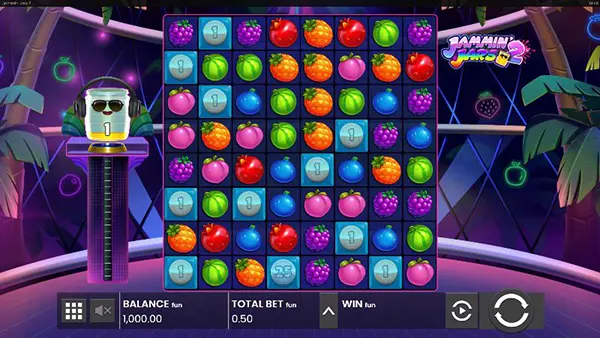
Jammin’ Jars 2 operates on an 8×8 grid, meaning 64 positions are active on every spin. Instead of traditional paylines, the game uses a cluster pays system: players must land five or more matching symbols touching horizontally or vertically to form a winning group. Diagonal connections do not count. This structure changes the rhythm of play compared with fixed-line slots, as wins depend on symbol density rather than line positioning.
After a winning cluster forms, the symbols involved disappear and new ones fall into place from above in a cascading sequence. Each cascade gives an opportunity to build additional clusters within the same paid spin. This mechanic increases the probability of multi-stage wins and is fundamental to understanding how the roaming jars reach higher multipliers during a single sequence.
The slot features fruit symbols in multiple colour variants, each with different base payout values. Lower-value fruits pay smaller cluster returns, while premium fruits generate higher multipliers of the stake. RTP typically sits at 96.8% in its standard configuration, although operators may offer slightly adjusted versions depending on jurisdiction. Volatility remains high, meaning extended dry spells are possible before a significant cluster sequence appears.
Symbol Behaviour and Win Calculation
Cluster size directly determines payout scaling. The more matching symbols in contact, the higher the multiplier applied to the stake. Unlike line-based slots where combinations are capped by reel structure, the 8×8 layout allows unusually large clusters, particularly after multiple cascades reshape the grid.
Wild symbols appear as jars and substitute for all standard fruit symbols. They do not form clusters on their own but can significantly expand an existing group. Because the grid is wide, a well-placed wild can connect separate symbol pockets into a single large cluster, increasing payout potential exponentially rather than incrementally.
All wins within a cascade chain are multiplied by the values collected by roaming jars. This means calculation is layered: first cluster size determines base payout, then accumulated jar multipliers are applied. Understanding this two-step structure is essential for realistic expectations about peak win potential.
Roaming Jars: Moving Multipliers in Action
The defining mechanic of Jammin’ Jars 2 is its moving multiplier jars. On every spin, between two and four jars appear randomly on the grid. These jars move one position in a random direction after each cascade, including diagonally. Their movement continues as long as new wins are triggered within the same spin.
Each jar collects value when it participates in a winning cluster. Instead of applying its multiplier instantly and resetting, the jar retains and accumulates its value throughout the cascade sequence. If multiple jars contribute to the same cluster, their multipliers combine before being applied to the win total.
This roaming system introduces dynamic positioning strategy. While players cannot control jar movement, observing patterns helps in assessing momentum during a spin. If jars drift toward dense symbol areas after the first cascade, the probability of multiplier stacking increases significantly.
Multiplier Accumulation and Maximum Exposure
During base gameplay, jars can build substantial multipliers if cascades continue. Because each jar moves independently, overlapping movement paths may result in stacked multipliers on a single large cluster. In extended cascade chains, this is where the slot’s highest potential emerges.
The theoretical maximum win is 10,000× the stake, consistent with Push Gaming’s high-volatility portfolio standards as of 2026. Achieving such returns requires multiple jars accumulating large multipliers and connecting within the same extended cascade cycle.
From a risk-management perspective, players should recognise that multiplier growth depends on consecutive wins rather than isolated spins. Most sessions will include modest clusters and limited jar interaction, with rare sequences delivering disproportionate returns.
Free Spins Feature and Volatility Profile
Free Spins are triggered by landing three bonus symbols anywhere on the grid. The feature begins with a set number of spins, during which jar behaviour becomes more aggressive. Additional jars may be introduced compared with base gameplay, increasing multiplier stacking probability.
Within Free Spins, accumulated multipliers can grow more rapidly because cascade frequency often increases. Jars continue moving after each win, and retriggers are possible if additional bonus symbols land. This amplifies volatility and significantly raises short-session exposure.
It is important to note that Jammin’ Jars 2 is classified as high volatility. Long sequences without major hits are statistically normal. Bankroll planning and defined loss limits are critical, particularly during feature rounds where swings can intensify quickly.
Practical Session Considerations in 2026
As of 2026, many UK-facing operators provide adjustable stake ranges suitable for both low and mid-level budgets. The game is fully optimised for mobile devices, with smooth jar animation and stable performance even during extended cascade sequences.
Players evaluating this title should compare RTP configuration, maximum bet limits and available bonus-buy options where permitted by regulation. In certain regulated markets, direct bonus purchase may be restricted or removed entirely, affecting volatility planning.
Jammin’ Jars 2 remains one of Push Gaming’s flagship cluster slots due to its clear mechanical identity: a wide grid, persistent moving multipliers and rare but substantial upside potential. For players who understand volatility and accept long variance cycles, it offers a technically coherent and strategically engaging structure rather than superficial complexity.