
Temple Tumble 2: slot review and beginner strategy for new players (2026)
Temple Tumble 2 (often listed as “Temple Tumble 2: Dream Drop”) is a high-volatility Relax Gaming slot built on a 6×6 grid with tumbling wins and a board that expands as stone blockers are broken. It looks straightforward, but players can misread what actually drives progression, how the Free Spins options change the risk profile, and why the published RTP may differ from one casino to another. This 2026-focused review explains the core mechanics in plain terms, highlights the numbers worth checking before you play, and offers a practical, beginner-friendly way to plan stakes and limits.
What Temple Tumble 2 is and how the core mechanic works
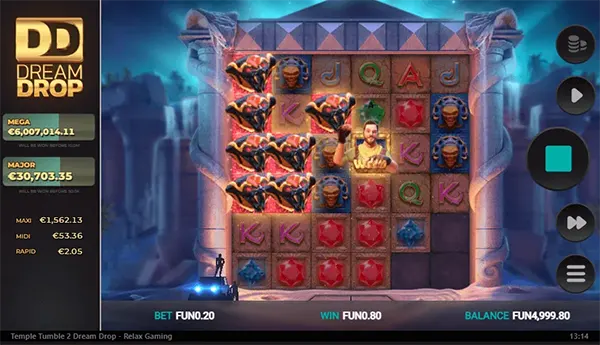
Temple Tumble 2 uses a 6×6 grid and tumbling wins rather than classic paylines. You will often see it described as offering up to 46,656 ways to win, which is linked to how many active positions are available on the grid once the board has fully opened. In practice, the “ways” figure matters less than understanding that the game becomes more flexible as more cells unlock, because more symbol connections can form during cascades.
The defining feature is the blocker system. The grid begins partially covered by stone tiles, and winning tumbles help break blockers on or near the active area, gradually opening the board. That means a spin can be valuable even when the payout is modest, because it contributes to unlocking more of the grid. Once all blockers are cleared, the game can trigger the Free Spins feature, where most of the session’s volatility typically concentrates.
Many casinos also integrate the Dream Drop jackpot mechanic into this title. Dream Drop is a random event that can appear during base-game play and lead into a separate jackpot sequence with multiple tiers. It is not something you can influence with timing, stake pattern, or “hot and cold” theories, so it is best treated as a potential extra rather than the main reason to play.
Numbers that matter in 2026: RTP settings, stake range, volatility
RTP is the first number to check, but it only helps if you verify the specific setting in the game’s information panel at the casino where you are playing. In 2026 it remains common for the same slot title to exist in more than one RTP configuration, depending on what the operator has chosen to deploy. This is why third-party listings can disagree with what you see inside the game, and the in-game figure should take priority.
Stake range is usually broad enough for both cautious and high-stakes sessions, but the exact minimum and maximum can vary by operator, currency, and local rules. For beginners, the important point is the ability to start low and learn the rhythm of blocker clearing and bonus access without paying for volatility at full price. A low stake also makes it easier to gather a realistic sample rather than forming conclusions from a single lucky or unlucky feature.
Volatility is widely described as high for Temple Tumble 2. High volatility does not mean the game is “worse”; it means outcomes can swing sharply, long quiet stretches are possible, and a large share of the overall return often arrives in bursts during strong cascades or Free Spins. If you play without limits, it can feel like the game is inconsistent, when it is simply behaving as a high-risk slot is designed to behave.
How the Free Spins round and modifiers change the session
The Free Spins round becomes available once the blocker tiles have been fully cleared. The base game is effectively the build-up phase: cascades and wins are not only payouts but also steps towards opening the entire grid. When the feature triggers, the game’s pacing changes because bonus mechanics can introduce stronger wild behaviour, multipliers, or symbol improvements that are rarely matched in the base game.
Temple Tumble 2 is commonly associated with selectable or variant Free Spins “styles” that alter how the bonus plays. Depending on the version and the casino integration, you may see options built around multipliers, sticky wilds, or symbol transformations. The labels can vary, but the practical point is that each style shapes risk and reward differently, even though the underlying RNG remains the same.
It helps to frame the feature realistically: no modifier guarantees a strong bonus. A multiplier-focused mode can look exciting but still produce a small return if hits are scarce, while a transformation-style mode may give more frequent connections but fewer headline spikes. For a beginner, the best outcome is understanding what each option is trying to do, so you can avoid expecting the wrong type of result from the bonus you chose.
Beginner-friendly approach to choosing a modifier and reading volatility
If you are new to the game, focus first on learning what a “normal” bonus looks like at your stake. Many players judge a slot after a single feature, but high-volatility titles are not built for consistent small wins. A symbol-transformation style (when offered) can be easier to understand because you can see the mechanic improving symbol quality, which makes the feature feel less opaque even when the payout is average.
Sticky wild styles are usually about creating stability on the grid. When a wild stays in place, it can support repeated cascades and turn otherwise ordinary tumbles into a longer chain of connected wins. This does not remove risk, but it can make the bonus feel more structured because you can identify exactly why certain connections keep happening.
Multiplier styles tend to be the most swingy. They can convert one strong cascade into a stand-out result, but they can also do very little if the bonus does not land enough wins for the multipliers to matter. If you prefer this style, it is sensible to test it on lower stakes first, then reassess only after you have seen several bonus rounds rather than one.
Practical strategy for newcomers: bankroll, session structure, safer play
There is no trick that changes the maths of a regulated RNG slot, so the only useful “strategy” is controlling exposure. With Temple Tumble 2’s high volatility, that starts with stake sizing: choose a bet level that allows you to absorb quiet periods without feeling pressured to increase stakes or chase the bonus. In practice, a beginner should prioritise learning and consistency over hunting for a rare peak outcome.
Set a simple session plan before you spin: a time cap, a loss cap, and a profit stop. The loss cap protects you from chasing the feeling of being “close” to clearing blockers, the time cap prevents fatigue-driven decisions, and the profit stop helps you lock in a good run rather than handing it back during the next downturn. These limits are not about being cautious; they are about staying in control when the game is designed to pull your attention into the next spin.
If autoplay is available, treat it as a convenience tool rather than a set-and-forget mode. Use a fixed number of spins and attach a loss limit, then review results between blocks. High-volatility slots can drain a balance quickly during cold stretches, and autoplay makes it easier to lose track of spend while you are waiting for blockers to clear.
A simple first-200-spins plan to keep risk under control
For a beginner test session, split your play into measured blocks. Start with 50 spins at a low stake, then pause and note how often cascades occurred and whether blocker progress felt steady or slow. Only continue if you are well within your loss cap. This approach gives you a more reliable picture of the game than judging it after a handful of spins.
If you trigger Free Spins within the first 100–200 spins, treat the bonus as information rather than a verdict. Note which modifier you used, whether you saw long cascades, and whether wins arrived in clusters or single hits. If the bonus rounds are consistently short and underwhelming, the smart adjustment is not to chase, but to reduce stake, shorten sessions, or move on.
Finally, keep safer-play habits in place: only gamble with money you can afford to lose, avoid chasing losses, and take breaks when emotions start driving decisions. Temple Tumble 2 is built to produce sharp swings, and the most effective way to handle that in 2026 is not finding a secret pattern, but sticking to limits you set while calm.